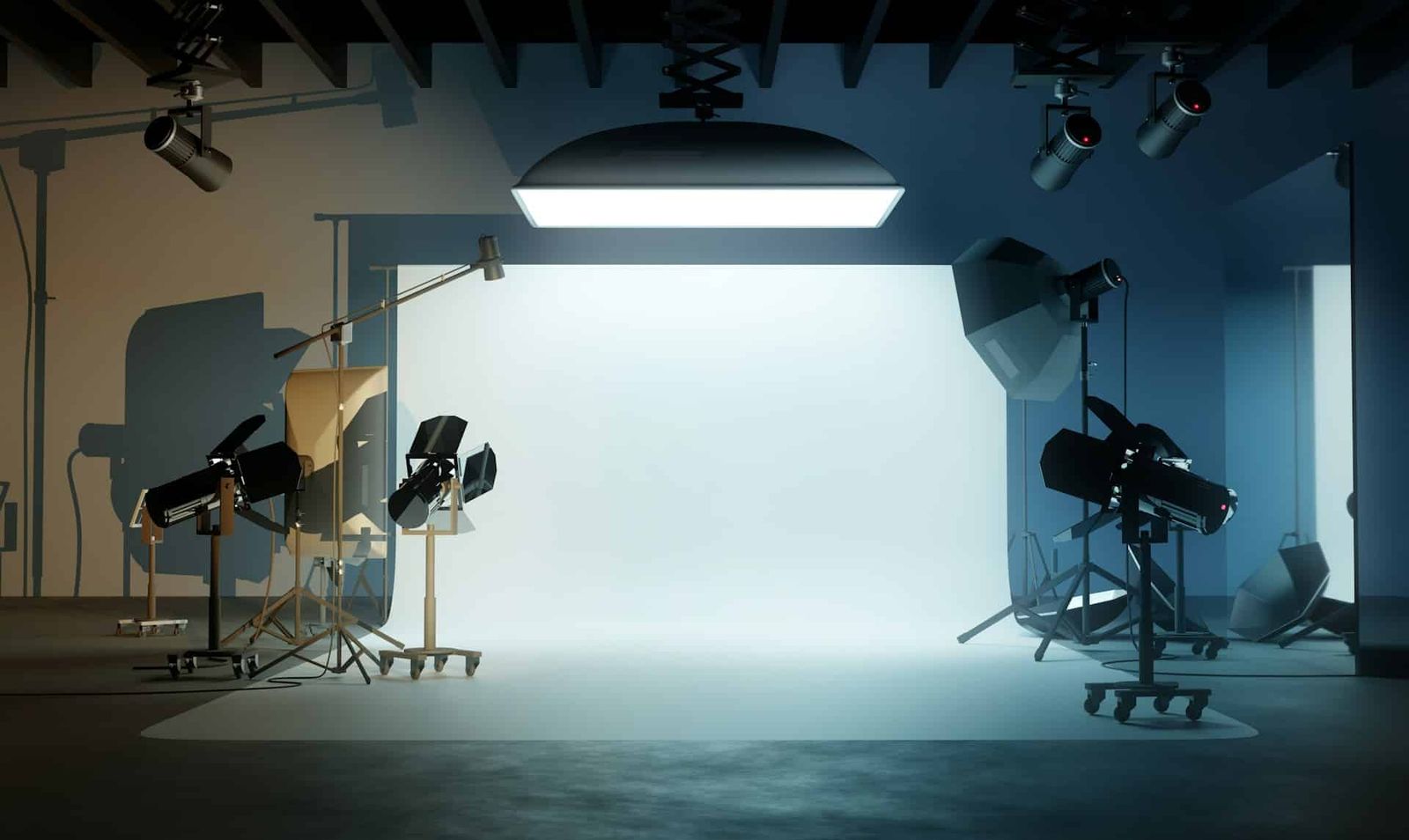
A cyclorama uses a curved wall and floor to remove the visible corner from the frame. Double-check its dimensions, colour, surface condition, lighting, permitted use, and repaint requirements before booking.
How a Cyclorama Changes the Frame
Use the curve only when it fits the planned frame, subject distance, movement, lens, lighting, and background treatment.
Cycloramas may be white, grey, or chroma green. Verify the current colour and any repainting requirement before booking.
- White can provide a neutral background for product, portrait, fashion, and video setups.
- Grey provides a darker neutral background.
- Chroma green can support background replacement when the surface, lighting, wardrobe, capture, and keying process are planned correctly.
Colour, surface condition, lighting, subject placement, camera settings, and post-production all affect the finished result.
Frame and Light the Curve
Set the camera position, subject mark, background exposure, and spill control before approving the first frame.
Lighting the curve evenly takes planning. Establish background exposure first, control spill on the subject, and check the surface for hotspots, reflections, and shadows.
- Review the frame for floor edges, wall edges, marks, and reflections.
- Establish the widest approved camera position and keep the frame inside the usable curve.
- A tested lighting setup can be repeated while the fixtures and camera settings stay unchanged.
Use the cyclorama for product, interview, fashion, or branded work only when its dimensions, surface, and approved use fit the shot plan.
Viva Studio Rentals has a 25 × 25 ft pre-lit white cyclorama inside a 2,000 sq ft soundstage. It books one production per day, giving that production full and undivided use of the 4,500 sq ft facility during the booked window.
Confirm the Current Surface and Repaint Plan
Inspect the curve and floor in person. Document marks, repairs, colour, and any area that will appear in frame.
Before booking, confirm:
- The current colour and surface condition
- Allowed footwear, carts, stands, props, liquids, tape, and floor protection
- Prepare floor protection for cases, stands, carts, props, and footwear before load-in.
- Any floor refresh or full colour repaint required before the production date
- The booking window, load-in route, support rooms, parking, and access required by the production
Protect the Cyclorama Surface
Document the studio’s cyc rules before the shoot.
- Map out stand and grip positions without assuming that equipment can sit on the cyclorama surface.
- Document every prop, stand, cart, liquid, tape, and footwear item that could contact the cyclorama, then discuss surface protection with the studio.
- Double-check the load-in route and cyclorama protection plan before moving carts or equipment onto the stage.
Designate the load-in path and equipment staging area before cases or carts enter the shooting floor.
Plan the Cyclorama Booking
Start with the shot list, then assign time for lighting, camera positions, tests, changes, approvals, and wrap.
- Write down the required wide, medium, and close frames with their camera positions and lenses.
- Keep cases and unused equipment in the assigned staging area, not on the cyc floor.
Document framing, camera settings, and lighting when separate takes need to match.
Use a tested artificial-lighting plan. Do not assume the room provides usable window light.
Check the Viva Cyclorama
Inspect the cyclorama surface, frame the widest shot, and test the planned lighting before booking.
The stage is sound-treated, not soundproof. If the production records dialogue or live audio, test the planned microphones in the room.
Inspect the cyclorama surface and test the widest frame and lighting plan during a free Tech Scout before booking. Review the photography studio.