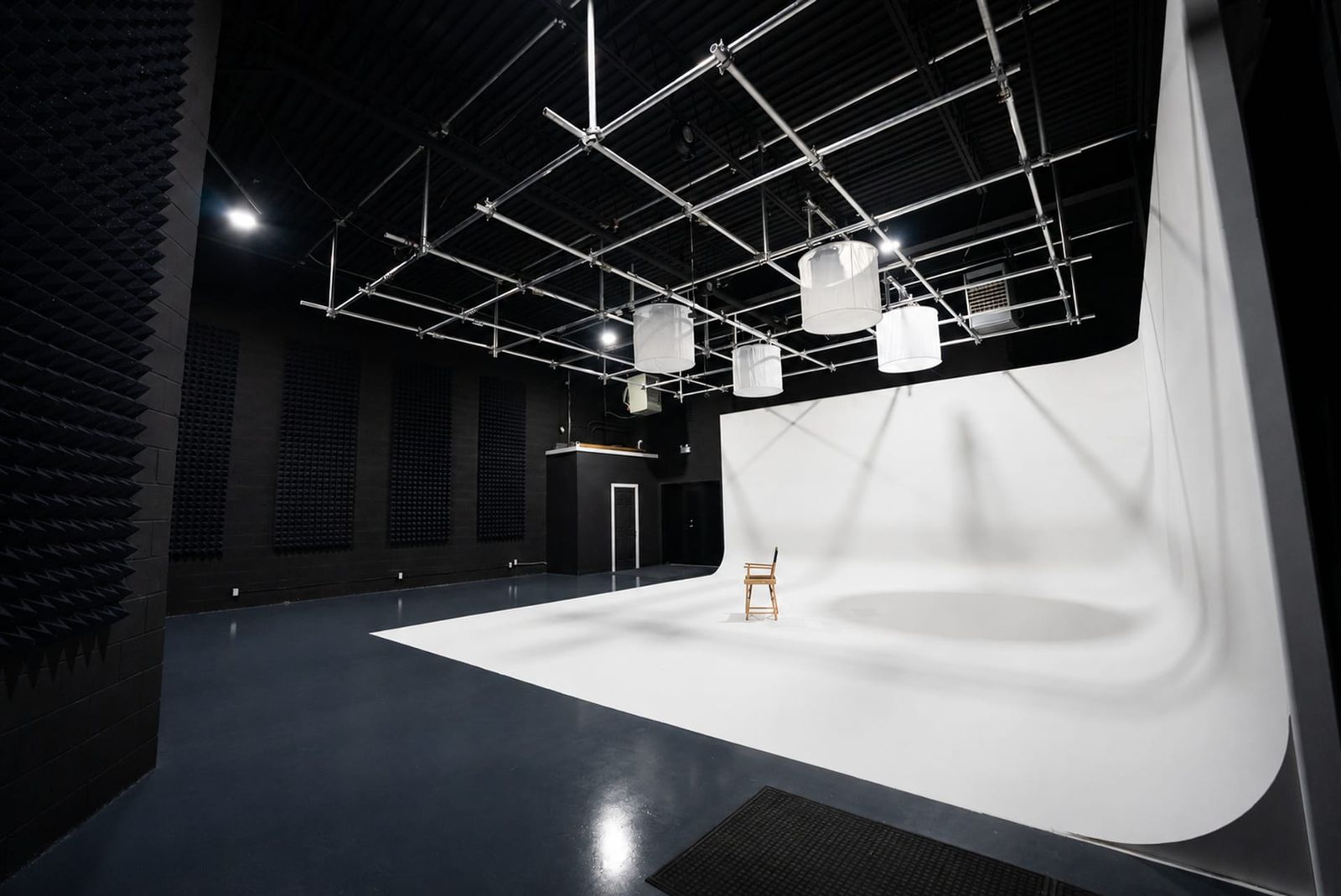
Three backgrounds dominate studio work: a white cyclorama, a green screen, and a plain backdrop. They are not interchangeable, and picking the wrong one costs you time on the day or headaches in post. Here is when each one is the right call.
What is the difference between a cyc, a green screen, and a backdrop?
A white cyc is a seamless curved wall where the floor and wall meet with no visible corner, so the background reads as infinite space. A green screen is a flat coloured surface you key out and replace in post. A backdrop is a paper or fabric background that gives you a clean, finite field of colour or texture.
Put simply: a cyc gives you infinite real space, a green screen gives you a placeholder for a digital world, and a backdrop gives you a simple, honest wall.
When should you shoot on a white cyc?
Choose a white cyc when you want the subject to float in clean, edgeless space: fashion, product, dance, performance, and any look where a horizon line would break the illusion. Because it is a real surface you light directly, the result looks physically present, with real shadows and real falloff, and nothing to fix later.
A pre-lit cyc also saves setup time. At Viva Studios the 25 x 25 ft cyc wall is pre-lit and ready, so you are shooting instead of building a background. That is often the deciding factor on a tight day.
When is a green screen the better choice?
Use a green screen only when the subject genuinely needs to live somewhere else: a composited environment, a driving plate, a set you cannot build. The tradeoff is real. Green screen adds a keying pass in post, demands careful even lighting and spill control on the day, and struggles with fine hair, reflective surfaces, and transparent props.
If your final shot is the subject in a real, clean space, a white cyc gets you there faster and looks better than keying green. Reach for green only when the concept truly requires a replaced background.
When is a plain backdrop enough?
A backdrop is the right, cheaper call for tight-framed work where you never see the floor-to-wall transition: headshots, talking-head interviews, portrait sessions, and product on a table. If the frame stays contained, you do not need the infinite falloff of a cyc, and a backdrop sets up in minutes.
The moment your frame widens, the subject moves through the space, or you need the floor in shot, a backdrop shows its edges and a cyc becomes worth it.
How do you choose quickly?
Ask three questions. Does the shot need to look like infinite real space, and will you see the floor? Shoot the cyc. Does the subject need to be placed into a world that does not exist? Green screen, and budget the post time. Is the frame tight with no floor-to-wall transition in shot? A backdrop is plenty.
Most Toronto studio shoots that people assume need a green screen actually want a clean white cyc, because the real goal is edgeless space, not a composite.
See the cyc before you decide
Viva Studios runs a 25 x 25 ft pre-lit white cyc wall on a 2,000 sq ft soundstage at 777 The Queensway in Toronto. Book a free 30-minute tour, bring a reference frame, and we will show you on the wall which background actually serves the shot before you commit the day.