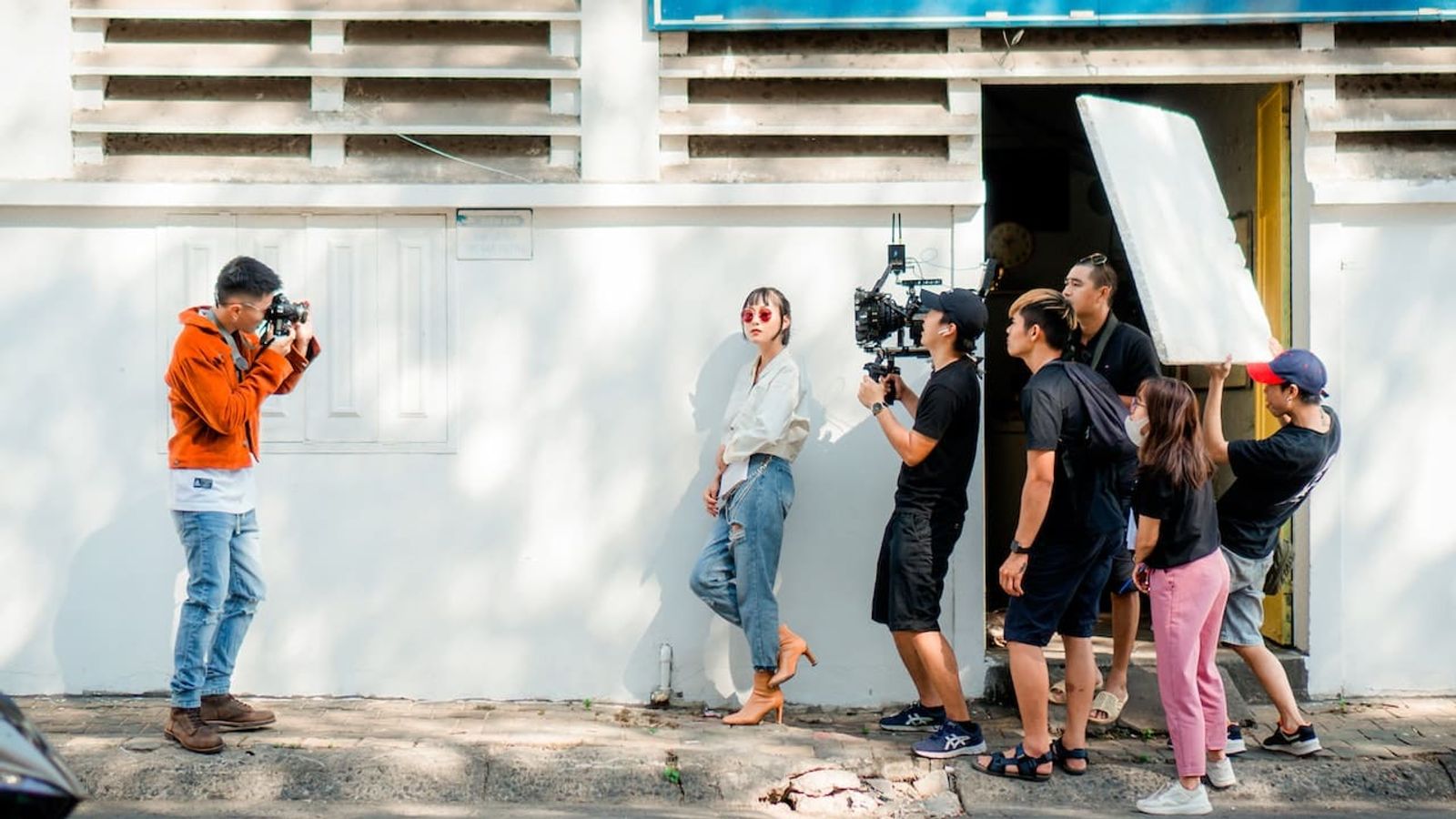
A lower-impact video production reduces avoidable travel, energy use, new purchases, and waste. The work starts in the brief, budget, and schedule, before the crew arrives.
Set a few project targets, such as fewer vehicle trips, less generator runtime, rented or reused set materials, refillable water, and less material discarded. Assign one person to record the result.
Use this guide when planning a production at Viva Studio Rentals. Start with the choices your own crew and suppliers control: transport, catering, materials, equipment, and waste.
Plan the Largest Impacts First
Travel and Transport
Choose the smallest practical number of locations and group scenes by location. A clear call sheet, confirmed access window, and consolidated pickup plan can reduce repeat trips for crew, cast, equipment, and art materials.
Use remote pre-production meetings when they are adequate. For the shoot, share transit and ride information, hire locally where practical, and combine supplier deliveries instead of sending several partly loaded vehicles.
Keep a simple transport log with kilometres, vehicle type, and number of trips. This gives the next production a baseline for planning fewer or shorter journeys.
Power and Lighting
Build the lighting plan around the exposure and look the camera needs. Compare fixture output and power draw, then choose the smallest package that can do the work safely. Colour quality, beam control, rigging, and flicker still matter.
Use available mains power when it is suitable and approved for the planned load. Do not guess at a studio’s circuit capacity. Review electrical requirements during the Tech Scout and use qualified crew for the setup.
The schedule also affects power use.
Pre-light once when the setup can serve several angles. Group scenes that share a setup, and switch fixtures off during long breaks when it is safe to do so.
Test exposure, dimming, colour, and camera flicker before the shoot. A verified plan reduces last-minute fixture swaps and extra rental runs.
Viva Studio Rentals includes four Aputure Nova P300c lights in the base studio rate. Additional or specialty lighting and grip are available à la carte through Viva Camera and billed separately. Studio clients receive a fixed 25% discount.
Sets, Wardrobe, Catering, and Waste
Before ordering, list what each department expects to buy, rent, reuse, donate, recycle, or discard. Confirm storage, returns, and collection before shoot day.
- Rent or reuse before buying: Check rental houses, existing stock, modular flats, props, wardrobe, and reusable protection materials before ordering something new. Confirm return conditions before modifying any rented item.
- Reduce single-use service items: Arrange drinking-water refill points and ask catering about reusable or locally accepted recyclable serviceware. Tell the crew before call time so they can bring bottles and mugs.
- Plan sorting before the shoot: Ask what waste streams the site and local service actually accept, label bins clearly, and assign wrap responsibilities. Do not call material recycled unless the receiving service accepts it.
For sets and props, confirm the next destination before construction begins. Return rentals, store reusable pieces, offer suitable materials to another production, or use a verified donation or recycling service.
Measure What Happened
After wrap, record actual crew travel, freight, energy or fuel use where available, materials purchased, rentals returned, and waste removed. If you estimate, write down the method and use it consistently.
Compare the result with the original targets. Note what caused extra trips, rush purchases, idle power, or discarded material, then carry two or three specific changes into the next production plan.
If you are considering Viva Studio Rentals, review the studio gallery, then use a Tech Scout to confirm the layout, load-in, included lighting, and technical requirements. Ask your suppliers how they handle transport, packaging, collection, and materials after use.