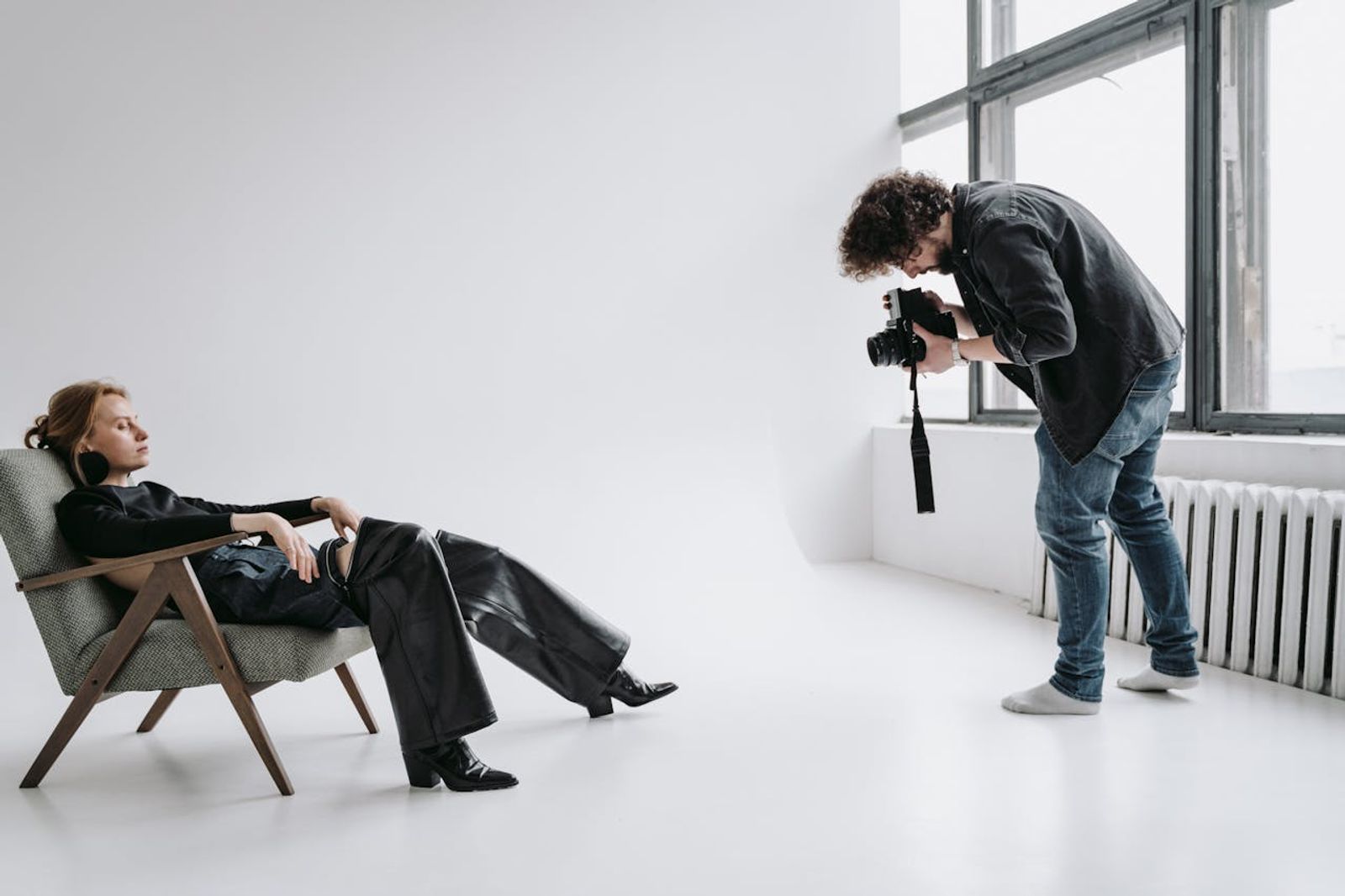
A branding shoot needs a location that fits the lighting, backgrounds, products, people, equipment, and schedule in the approved brief.
Evaluate the studio, lighting, backgrounds, load-in, equipment, support rooms, and booking terms with the approved brand-photo plan.
Build Repeatable Brand Setups
A studio can provide a repeatable setting for lighting, backgrounds, and camera positions. Document each setup when several images must match.
- Verify that the floor, walls, and usable area fit each subject, product, prop, and background.
- Write down fixture positions, exposure, white balance, lens, and camera distance when several images must match.
- A fixed indoor set can support repeatable framing when the lighting, camera, background, and subject marks are documented.
Travel and load-in remain part of the schedule. Double-check both before issuing call times.
Viva Studio Rentals books one production per day, giving that production full and undivided use of the 4,500 sq ft facility during the booked window. It includes a 2,000 sq ft soundstage, a 200 sq ft hair and makeup room, a 200 sq ft green room, 1,000 sq ft of flex space, and a client lounge. Use a Tech Scout to assess any blackout or other light-control requirements.
Confirm the Facility and Included Package
Compare the usable floor area, dividers, staging, client seating, and shooting zones with the planned crew and equipment.
- Double-check the included lighting and review technical requirements before booking.
- Verify the hair and makeup and wardrobe-change areas before issuing the schedule.
- If the project needs stills and video, list the shared sets and the separate equipment and audio requirements.
- Verify which stands, tables, chairs, and other items are included. Source props, backgrounds, and specific furniture separately.
Review current images and floor plans, then inspect the facility during a Tech Scout before booking.
Plan the Booking Window
Create the booking window from load-in, setup, tests, the required shot list, approvals, and wrap.
- Verify the route from parking or the loading dock to the stage before call time.
- Establish call times from the crew travel and access plan.
- Review studio rates and booking options once the shot list, crew, and booking window are confirmed.
Document the approved artificial-light setup for any shot that must repeat.
Viva has free on-site parking and a 4 ft truck-height loading dock with an 8 × 10 ft door. Verify that cases, props, and set pieces fit the load-in route.
Run the Brand Shot List
Treat the mood board as a reference, then prioritize the required shot list against the available time.
- Shoot the required brand images before optional variations.
- Review test frames for crop, exposure, colour, focus, styling, and background.
- Stage wardrobe, products, props, and approved backups by setup order.
Document consumables and small production supplies before the shoot. Keep them in an assigned support area.
Match the Approved Brand References
A studio gives the team a consistent place to work, but the finished images still depend on the brief, shot plan, lighting, styling, performance, and post-production. Define those decisions before the shoot instead of expecting the room to make them.
Before booking, test the planned fixtures, exposure, and white balance instead of assuming studio lighting will produce a particular result.
Inspect walls and floors for colour, marks, reflections, and other details that may appear in the frame.
Document lighting, framing, backgrounds, and camera settings when later shots need to match.
Keep a record of the chosen backgrounds, lighting, camera positions, shot order, and approval points.
Review files during the shoot and correct lighting, styling, framing, or focus before clearing the setup.
Confirm the Studio Fit
Send the brand-photo shot list, crew count, load-in plan, and equipment list to Viva when the schedule is ready. Review the photography studio.